
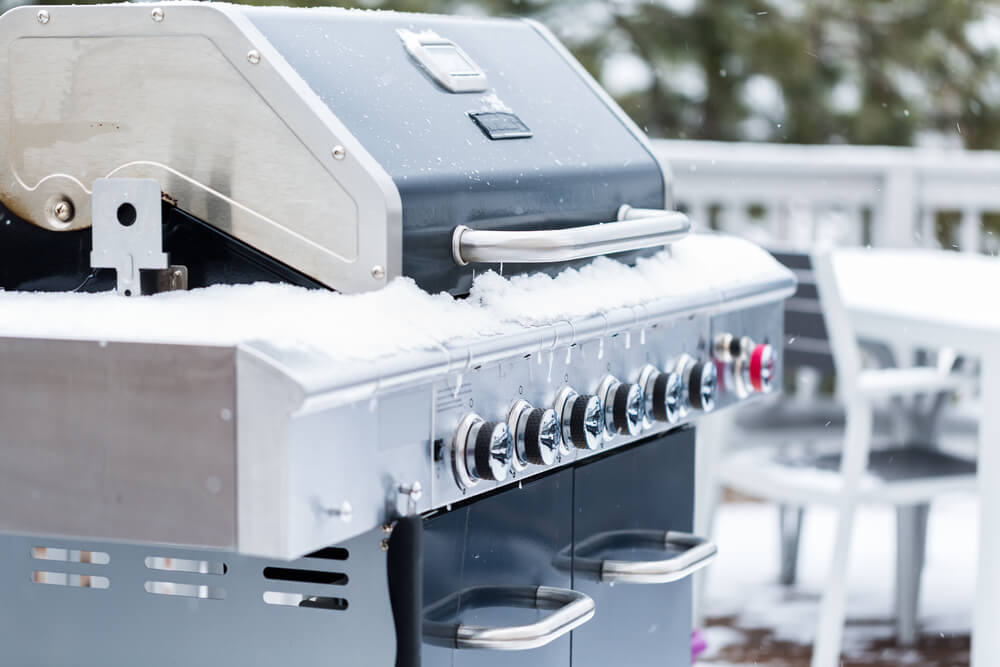
As much fun as it is to enjoy your outdoor kitchen all summer long in the warm sun, the cold weather eventually settles in and puts your outdoor cooking on pause for the season. Winterizing your outdoor kitchen can help protect the area from harsh winter conditions. But the timing for doing so can vary depending on where you live and your local climate. Take a look below as we guide you through some important considerations to help you know when it’s time to winterize your outdoor kitchen.
So, When’s the Right Time to Winterize?
The short answer is, it depends. The climate where you live may be more temperate with mild and short winters. Or, you may live in an area where temperatures already drop below freezing early in the fall. So, depending on your location, you may need to winterize earlier or later than others.
In general, there are a few considerations to help you determine when it’s the right time to winterize your outdoor kitchen where you live.
When is the First Freeze?
The biggest determining factor for when you should winterize your kitchen is when you expect the first freeze. Typically, you can expect this to occur in the late fall, though if you live up north, this may happen earlier in the year.
Keep your eye on the temperature and weather forecasts to help time the winterization of your outdoor kitchen. Doing so will help prevent damage to your appliances, plumbing, and other outdoor kitchen fixtures once the temperatures plummet.
What Elements are in Your Outdoor Kitchen?
The various elements that make up your outdoor kitchen can also help determine when you should winterize the area. In other words, when and how you winterize your various appliances, equipment, plumbing, and cabinets can vary widely.
For each of your appliances and pieces of equipment, make sure to consult with the manufacturer’s guidelines about any necessary winterization requirements or winter storage suggestions. Their guidelines can help you time the winterization of the various appliances, like the stove, oven, fridge, and others.
Possibly the most pressing element for winterization is your plumbing. In general, the sink or dishwasher will need to have the water lines drained and disconnected until the warmer weather returns. So, this will need to be done preventively before the first freeze, ideally.
When it comes to your cabinets, the material you choose will make a big difference in how much winter prep is required. Traditional wood and even stainless steel cabinets typically need extra protection from snow, ice, and moisture to prevent warping, rust, or peeling finishes. HDPE outdoor cabinets, like Werever’s UV-stabilized HDPE cabinetry, are fully weatherproof and do not require special winterization beyond an occasional rinse and wipe-down, even in harsh climates.
General Winterization Guidelines for Outdoor Kitchens
Aside from your local climate and the manufacturers’ guidelines for your outdoor kitchen appliances and equipment, there are some general timing considerations for winterizing the area.
No matter where you live, it’s generally recommended to cover or store appliances and all outdoor kitchen surfaces to keep them safe from snow and ice. This will ensure your outdoor kitchen stays in pristine condition and is ready to use again once the weather warms up again.
For your cabinets, countertops, and any other items that will remain outside throughout the winter, make sure you invest in a quality waterproof covering to protect your outdoor kitchen, unless you have HDPE outdoor cabinets. Because HDPE is non-porous, UV-stabilized, and moisture-resistant, Werever’s HDPE cabinets can be left uncovered year-round without concerns about rot, rust, or peeling finishes; most homeowners simply keep them clean and let them ride out the winter as-is.
You may feel like you’re closing up shop prematurely when there are still some warmer days left on the forecast. However, you’d rather be safe than sorry when it comes to winterization, so you can avoid any costly replacements come springtime, especially for more vulnerable materials. With weatherproof HDPE outdoor cabinets doing the heavy lifting, you can focus your winter prep on plumbing and appliances instead of worrying about your cabinetry. All in all, being proactive with your winterization efforts will allow you to best protect your outdoor kitchen.