
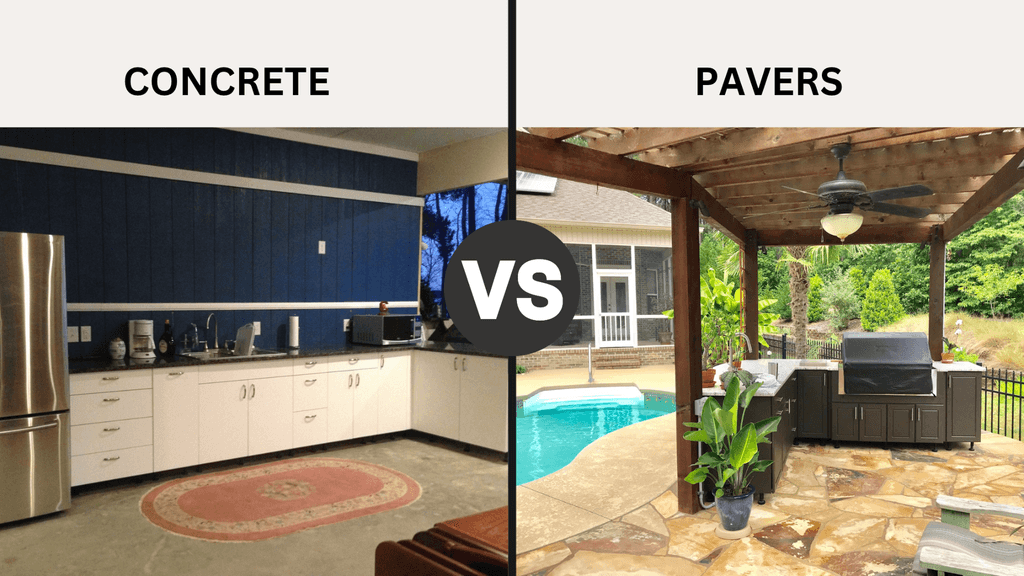
Building an outdoor kitchen starts from the ground up, literally! Before choosing cabinets, countertops, and appliances, you need to consider the surface supporting your new space. Two popular options are pavers and concrete slabs, each offering distinct advantages.
So, which is better for an outdoor kitchen? While concrete generally provides greater stability, properly installed pavers can work just as well. The key is ensuring your foundation is prepared correctly for long-term performance.
Outdoor Kitchen on Pavers vs. Concrete: Key Differences
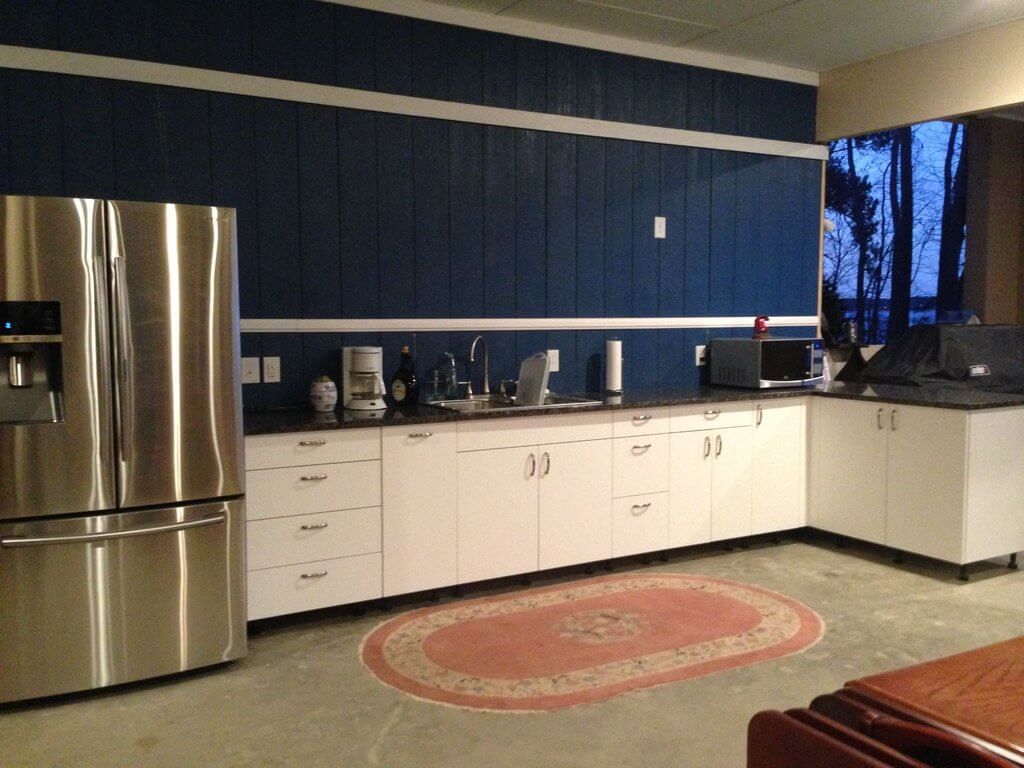
Concrete Slabs: Stability and Durability
A concrete slab provides a solid, continuous surface, making it an excellent foundation for an outdoor kitchen. Its stability helps support heavy cabinets, countertops, and appliances without significant movement.
However, concrete isn’t immune to problems. In colder climates, freezing temperatures can cause the ground to heave, potentially cracking or lifting sections of the slab.
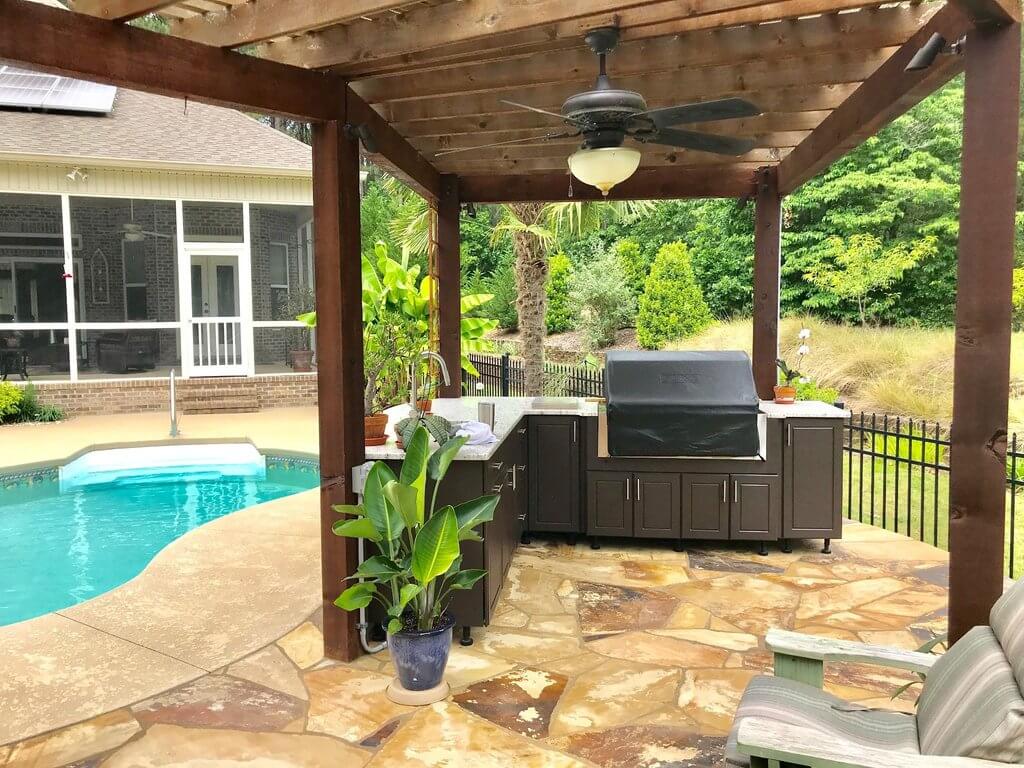
Pavers: Flexibility and Visual Appeal
Pavers offer greater design flexibility, with numerous colors, patterns, and textures available to complement your backyard.
Interlocking pavers can be particularly beneficial in colder climates because individual pieces can shift slightly during freeze-thaw cycles and be re-leveled when necessary.
The biggest concern is settling. Pavers must be installed over a properly compacted aggregate base rather than directly on dirt. Without adequate preparation, uneven surfaces and drainage problems can develop.
Installation Considerations for Outdoor Kitchens
Proper Ground Preparation and Drainage
Regardless of your foundation, proper grading and drainage are essential. Water should flow away from the kitchen rather than collect beneath cabinets or appliances.
For paver installations, the depth and composition of the compacted base depend on local soil conditions, climate, and expected loads. Thin pavers may require installation over concrete or another sufficiently rigid base.
An experienced hardscaping professional can determine the appropriate foundation for your property.
Leveling Outdoor Kitchen Cabinets
Uneven surfaces don’t necessarily mean uneven cabinets!
Our custom outdoor kitchen cabinets feature adjustable leveling legs that accommodate drainage slopes and minor variations in surface height.
Even when individual pavers sit at slightly different elevations, these adjustments help ensure cabinets remain level, plumb, and square.
Once connected and topped with countertops, a complete cabinet installation can weigh hundreds or even thousands of pounds, providing substantial stability. Additional anchoring requirements should still be evaluated for the installation.
Can You Build an Outdoor Kitchen on Existing Pavers?
Absolutely! An existing paver patio can support an outdoor kitchen when its underlying base is stable and capable of handling the anticipated weight.
Before installation, inspect for sinking pavers, low spots, drainage issues, and shifting caused by deteriorating tree roots or improperly compacted soil.
Address these problems before adding permanent cabinetry.
Another essential consideration is utility placement. Gas, water, and electrical connections should be planned before completing the hardscape.
Our outdoor kitchen design process helps establish cabinet and appliance locations so contractors can coordinate utility lines ahead of installation.
Which Foundation Is Best for Your Outdoor Kitchen?
Both pavers and concrete slabs can provide excellent foundations. Concrete offers greater inherent stability, while pavers provide flexibility, attractive design options, and easier localized repairs.
Ultimately, your soil conditions, drainage, climate, and installation quality matter more than the surface material alone.
At Werever, we design durable, weatherproof outdoor cabinets that work beautifully on properly prepared pavers, concrete, and even suitable wood or composite decks.