
A well-designed outdoor kitchen needs more than a grill and countertops. From refrigerators and ice makers to lighting and convenience outlets, electricity can play an important role in making your backyard kitchen comfortable and functional.
The key is planning your electrical needs before your outdoor kitchen is installed. Thinking ahead about appliance locations, outlets, lighting, and future upgrades can help you avoid expensive changes once cabinets and countertops are already in place.
Plan Your Outdoor Kitchen Electrical Early
Start by deciding which features will require electricity. Depending on your design, that could include a refrigerator, ice maker, vent hood, grill components, lighting, televisions, speakers, or other outdoor appliances.
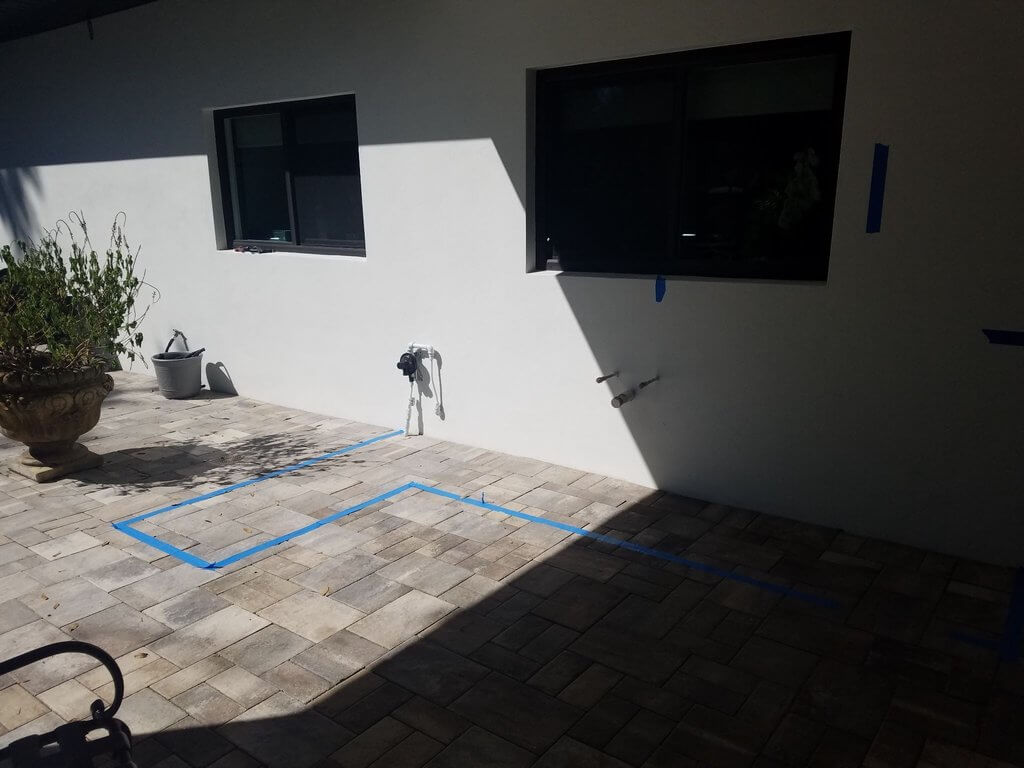
Marking these items on your initial kitchen plan helps determine where electrical connections and outlets should go. In fact, electrical wiring is generally best completed before the countertops are installed, particularly when outlets will be incorporated into a backsplash.
Planning utilities early can also simplify the overall project. Our custom outdoor kitchens are designed around the specific space, appliances, and features you select, allowing details such as electrical, gas, and plumbing connections to be considered as part of the layout.
Use Outdoor-Rated Electrical Components
Outdoor electricity requires additional protection because the system may be exposed to moisture, temperature changes, and other environmental conditions.
GFCI Protection
Outdoor receptacles generally require GFCI (ground-fault circuit interrupter) protection under applicable electrical codes. GFCI protection is designed to interrupt power when a potentially dangerous ground fault occurs.
Depending on your kitchen design, appliances may also require dedicated circuits or specific electrical configurations. Always follow the appliance manufacturer’s installation requirements and applicable local electrical codes.
Weather Resistant Outlets and Covers
Receptacles, boxes, covers, fixtures, and other components should be suitable for their specific outdoor location. Even a covered outdoor kitchen can experience wind-driven rain and moisture, so don’t treat the space like an indoor room simply because it has a roof.
Think Beyond the Appliances
Electrical planning shouldn’t stop at the refrigerator. Good outdoor lighting makes your kitchen safer and more enjoyable after sunset while adding another layer of style to the space.
Consider task lighting around cooking and preparation areas, ambient lighting for entertaining, and outlets positioned where you might eventually want countertop appliances or other accessories. Planning a little extra capacity now may give you more flexibility as your outdoor living space evolves.
Coordinate Electrical With Your Cabinet Installation
Werever cabinets can accommodate utility connections without turning the cabinetry installation into a major construction project. Openings can be made through appropriate cabinet areas for electrical wiring, plumbing, and other utilities.
Electrical work itself is different. Because improper outdoor wiring can create serious shock and fire hazards, we recommend working with a qualified electrician for new circuits, wiring, and other electrical installations. Electrical work may also require permits or inspections depending on your municipality, so check local requirements before construction begins.
Build Electrical Planning Into Your Outdoor Kitchen Design
Plan electrical before your outdoor kitchen takes shape, not after the cabinets and countertops are finished.
Make a complete list of appliances, lighting, outlets, and potential future additions during the design stage. Then coordinate those requirements with your electrician and kitchen layout.