
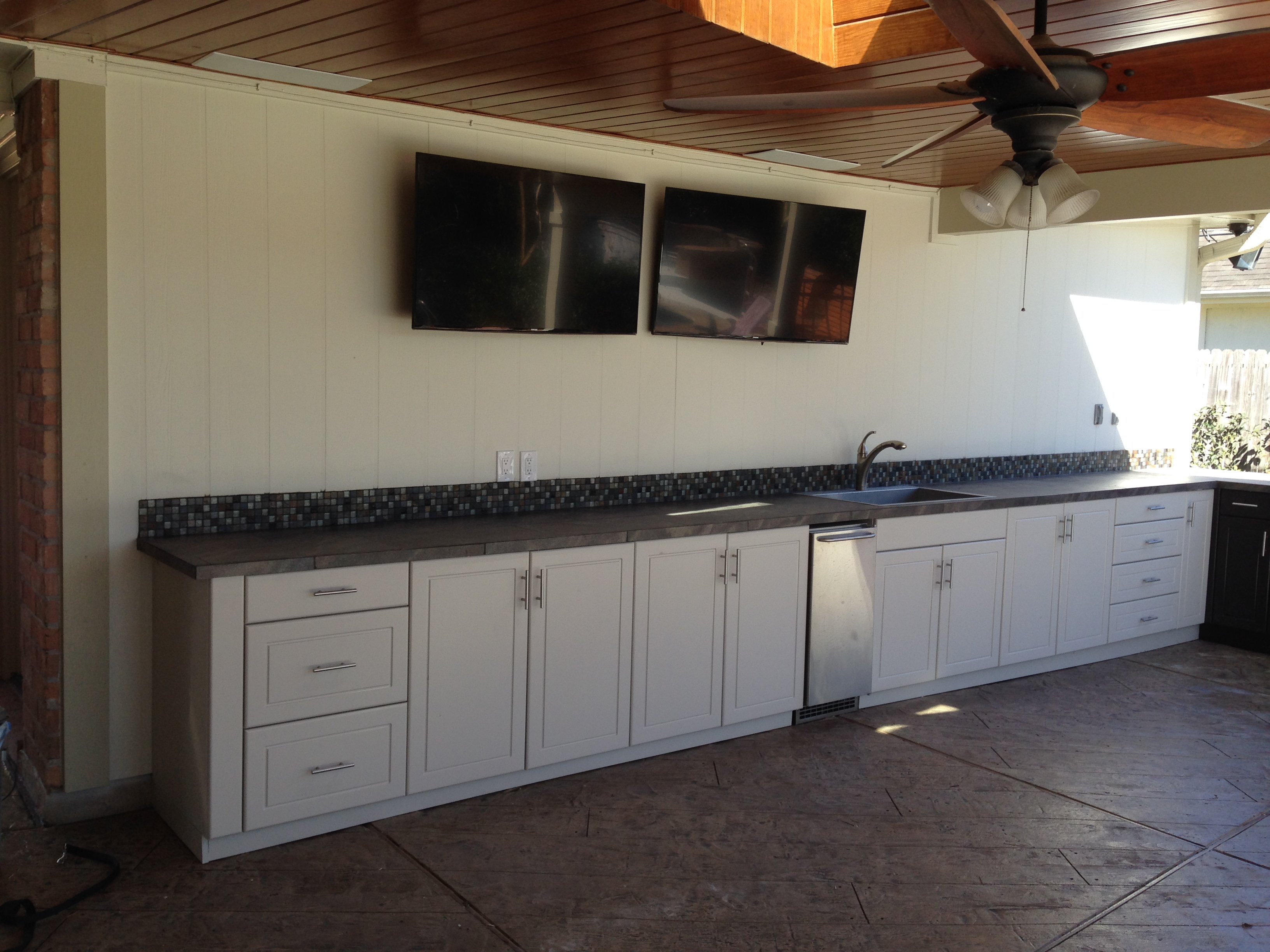
Placing an outdoor kitchen against the house is a popular way to create a functional cooking area without sacrificing unnecessary patio or backyard space. Yes, an outdoor kitchen can be installed against your home, but the layout needs to account for grill clearances, heat protection, ventilation, wall construction, and local building requirements.
Careful planning is particularly important when a built-in grill or other high-heat appliance will sit near the house. A professionally designed Werever outdoor kitchen can account for these details before installation begins.
Can an Outdoor Kitchen Be Against a Wall?
Absolutely. A straight outdoor kitchen positioned along an exterior wall can be an efficient solution, especially when working with a smaller patio. However, the wall itself and what is behind or attached to it must be considered during the design process.
Check Clearance to Combustibles
Every grill manufacturer establishes clearance-to-combustible requirements for its appliances. Combustible materials can include wood framing, siding, HDPE cabinetry, and other materials that are not completely fireproof.
For that reason, the grill should never simply be positioned wherever it fits. Its manufacturer specifications must guide the design, including any required clearance beside, behind, or above the appliance. Local building codes can also establish additional requirements, so homeowners should check with their local building authority when planning the project.
Why Your Grill Needs an Insulating Liner
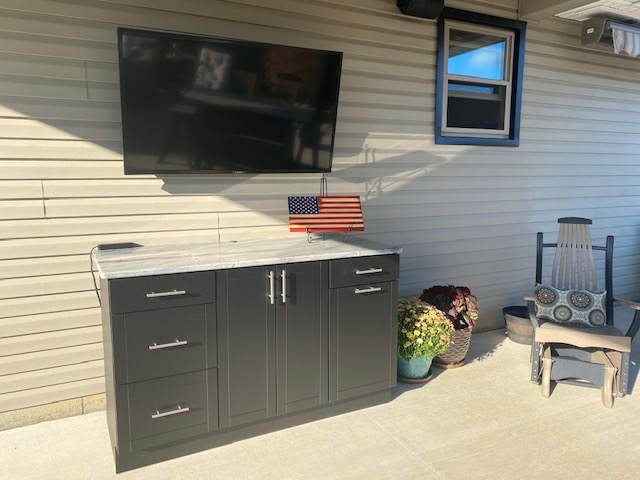
When a built-in grill is installed within Werever HDPE cabinetry, a factory-manufactured insulating liner, also called an insulating jacket, is required.
The insulating liner creates a protective barrier between the high temperatures generated by the grill and the surrounding combustible enclosure. Werever grill cabinets are custom-cut for the selected grill model, insulating liner, and countertop configuration, helping create a precise installation rather than requiring extensive modifications in the field.
Does an Outdoor Kitchen Against the House Need Ventilation?
Ventilation depends heavily on the location and structure surrounding the grill. An uncovered outdoor kitchen may allow smoke and heat to dissipate naturally, while a grill installed beneath a roof, lanai, pergola, or other enclosure may require a properly sized ventilation hood.
Local codes should always be checked because requirements vary by jurisdiction. Even when a hood is not explicitly required, good ventilation can help move smoke, grease, and heat away from the house and gathering areas. Werever’s outdoor kitchen guidance likewise recommends following manufacturer specifications closely when positioning ventilation equipment.
Secure Cabinets Properly Against the House
Proper installation matters just as much as appliance placement. Before cabinets are fastened, the entire kitchen should be laid out and the cabinets made level, plumb, and square.
Werever’s installation instructions specify that once base cabinets are leveled, they should be fastened to the wall using hardware appropriate for the wall construction. Two wall fasteners per base cabinet are recommended, while wall cabinets require at least four anchors secured into suitable structural elements.
Design an Outdoor Kitchen That Works With Your Home
Putting an outdoor kitchen against the house can provide an efficient, attractive layout, but safety requirements should shape the design from the beginning. Account for clearance to combustibles, follow grill and ventilation manufacturer specifications, use the required insulating liner, verify applicable local codes, and anchor the cabinetry correctly.
With those details addressed during the design phase, your outdoor kitchen can feel like a seamless extension of the home while providing the durability, storage, and cooking space you need.